You've searched for an AI second brain. Maybe more than once.
You've tried the note-taking app that promised to think with you. You've tried bolting an AI layer onto Notion, or Obsidian, or a folder of voice memos. You've built the tags, the links, the folders. For a while it felt like progress.
Then it stopped. Not because you gave up, because the system was never going to hold up its end.
The Capture Trap
Here's the belief every one of these tools is built on: the problem is capture. Capture more, organize it better, and your thinking improves.
It's a lie. A useful-sounding one, which is why it's lasted 30 years.
210,000 people in r/PKM have asked the same question: I built an elaborate system and abandoned it, what am I doing wrong? Millions of copies of productivity books have been sold on the premise that better structure solves this. It doesn't. Reading lists pile up. Voice memo folders go unopened. The graveyard of good intentions grows.
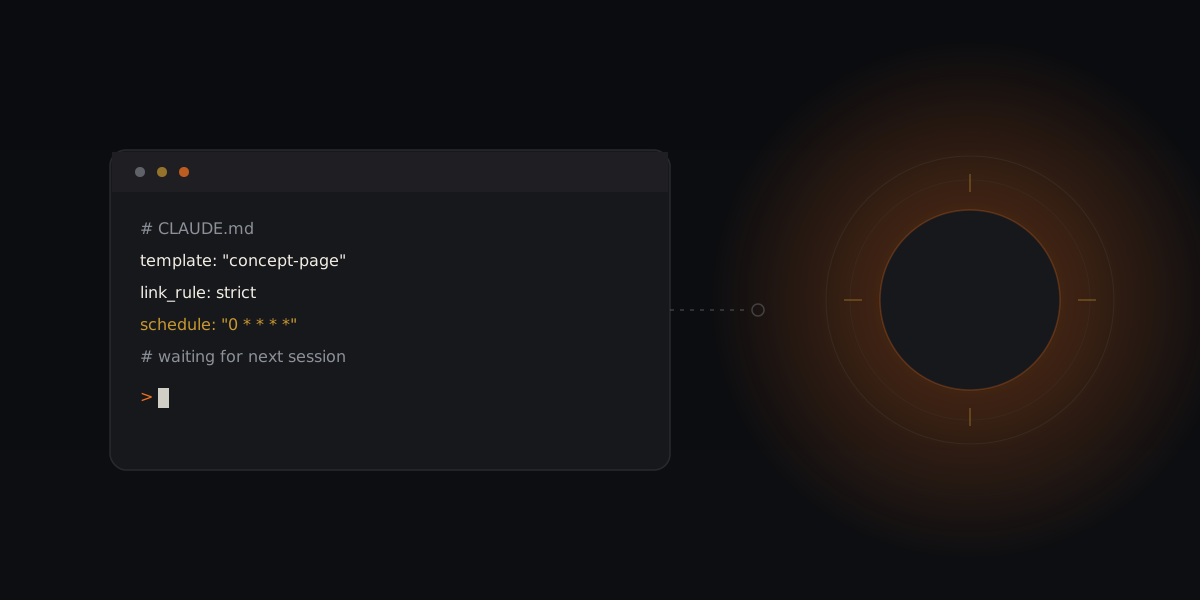
This isn't a personal failing. It's a design failure. Capturing without synthesis is expensive self-deception, it creates the feeling of progress while producing none. Even the version you engineer yourself, with Claude Code and a vector database, inherits the same flaw.
Why adding "AI" doesn't fix it
The newest wave of tools promises an AI second brain: your notes, but with a chatbot on top. The most ambitious of them promise an AI that remembers everything you've ever told it. It sounds like the fix. It isn't.
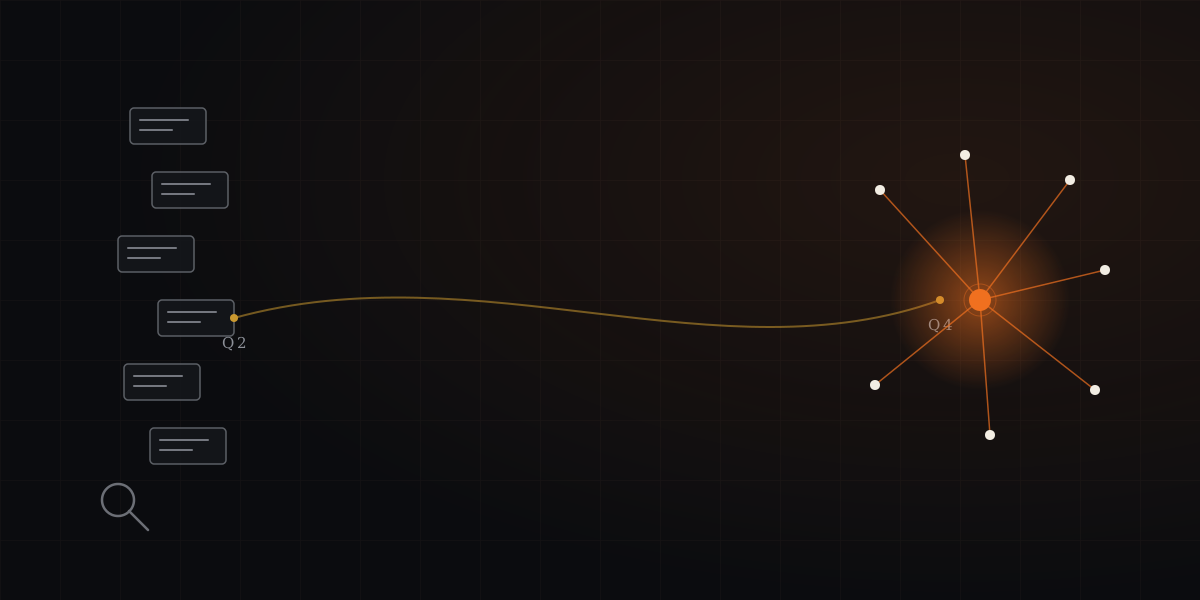
Your brain doesn't store facts in folders. It stores relationships, a network of edges, not nodes. Any tool built on the library metaphor, file it, tag it, search for it later, will fail the same way, no matter how much AI sits on top of it. Search is still retrieval. Retrieval waits for you to ask. Your best thinking doesn't wait.
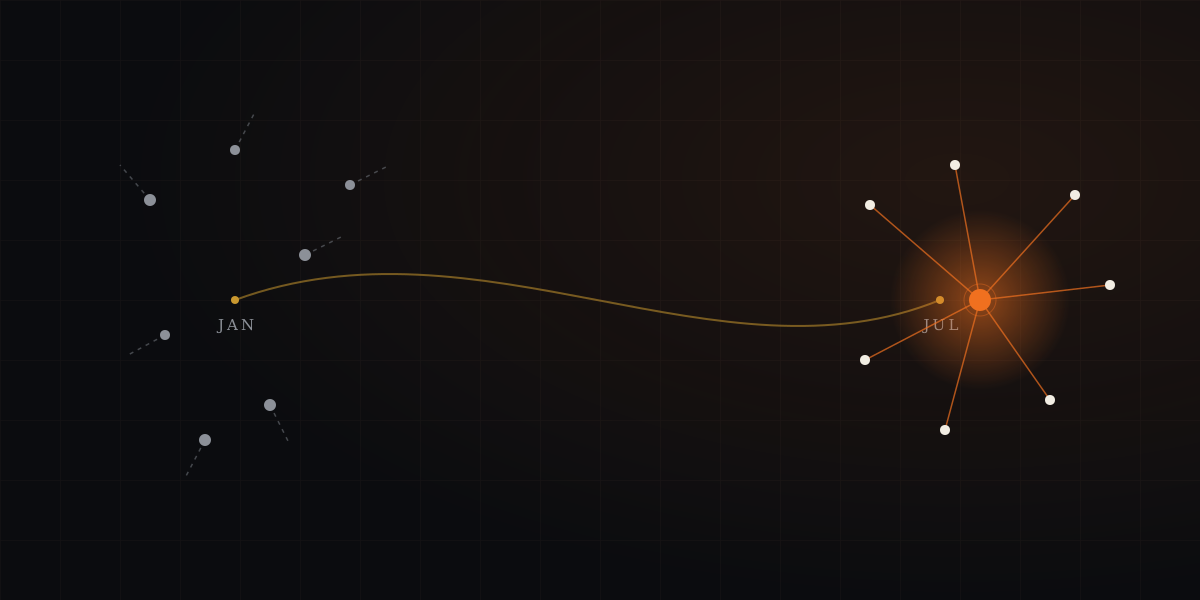
An AI layer that logs what you said and hands it back on request is a faster filing cabinet. It is not a mind. A system that recalls what happened in January is not the same as a system that understands why it matters in July.
What actually compounds your thinking
The starting premise has to change. Your thinking should compound over time, the way interest compounds money, automatically, without folders, without tags, without maintenance.
This is Personal Intelligence: an engine that learns how you specifically think, your patterns, your goals, your open loops, and acts on your behalf. It connects the insight you had in January to the decision you're making in July. It surfaces the pattern you've been living without noticing. It tells you what to do next, drawn from your own thinking, before you ask.
Nothing you capture is ever lost. Nothing needs to be organized. It just needs to be yours.
What this looks like
You had an insight three months ago. It's sitting in a voice memo you haven't opened since. Your Personal Intelligence already found it, and it's surfacing it now, ahead of the decision you're about to make.
That's the difference between a second brain you have to maintain and one that works on your behalf. One waits to be searched. The other acts before you ask.
FAQ
Is Ovandor an AI second brain app?
No. Ovandor is a Personal Intelligence engine. The difference isn't semantic, a second brain is something you build and maintain; Personal Intelligence builds and maintains itself, and acts on your behalf without being asked.
What's the difference between an AI second brain and Personal Intelligence?
An AI second brain adds a chatbot to a note-taking system, you still search for what you need. Personal Intelligence synthesizes what you capture into a living map of your thinking and surfaces what matters before you ask for it.
Can I build a second brain with AI tools I already use?
You can bolt AI onto a notes app. It will still wait for you to ask it something. The premise, capture and organize, doesn't change just because a chatbot is layered on top.
The Capture Trap is over. Your thinking, compounded. Your next action, surfaced. Nothing lost. Nothing to organize. Just intelligence, personal, proactive, yours.