You've searched for an AI that remembers everything. The assumption behind that search feels obvious: if a system never forgot anything you told it, your thinking would finally hold together.
It won't. Not because the memory isn't good enough yet. Because remembering was never the problem you actually have.
The Total Recall Fantasy
Here's the belief behind that search: more retention equals more intelligence. If the system logs every conversation, every note, every half-formed thought, it will eventually understand you.
It's a reasonable-sounding upgrade to the old capture-and-organize promise, and it's the same lie in a faster costume. Perfect memory isn't synthesis. A system that stores everything you've ever said is still just a bigger filing cabinet. It's more complete. It's still not thinking.
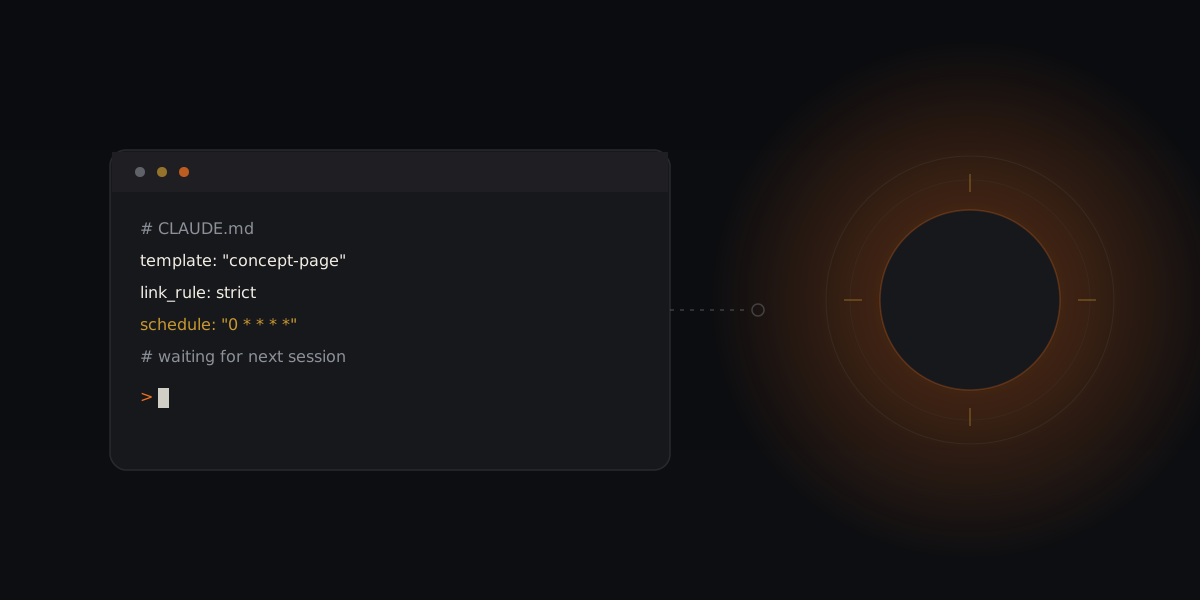
The tell is in how these systems actually get used: you still have to go ask. Pull up the thread. Search the history. Type the question. An assistant that remembers everything but waits for you to bring it up has automated the storage, not the thinking.
Why Perfect Memory Still Waits for You
Recall and understanding are not the same capability, and no amount of storage closes that gap.
An assistant that remembers past conversations can tell you what you said in March. It cannot tell you why what you said in March matters to the decision you're making now, because it never built the connection. It logged the words. It didn't notice the pattern.
Your own mind doesn't work by filing conversations away for later retrieval. It works by relationship, this insight connects to that one, this contradiction explains that stuck feeling, this open loop from months ago is exactly what today's decision is missing. A system that only remembers is optimized for the wrong unit. Facts aren't the asset. The connections between them are, and connections don't show up just because nothing got deleted.
That's why "remembers everything" is the wrong finish line. The finish line was never total recall. It was never having to ask in the first place.
The Shift: From Memory to Meaning
Personal Intelligence starts from a different premise: your thoughts should compound the way interest compounds money, automatically, without you going back to check the balance.
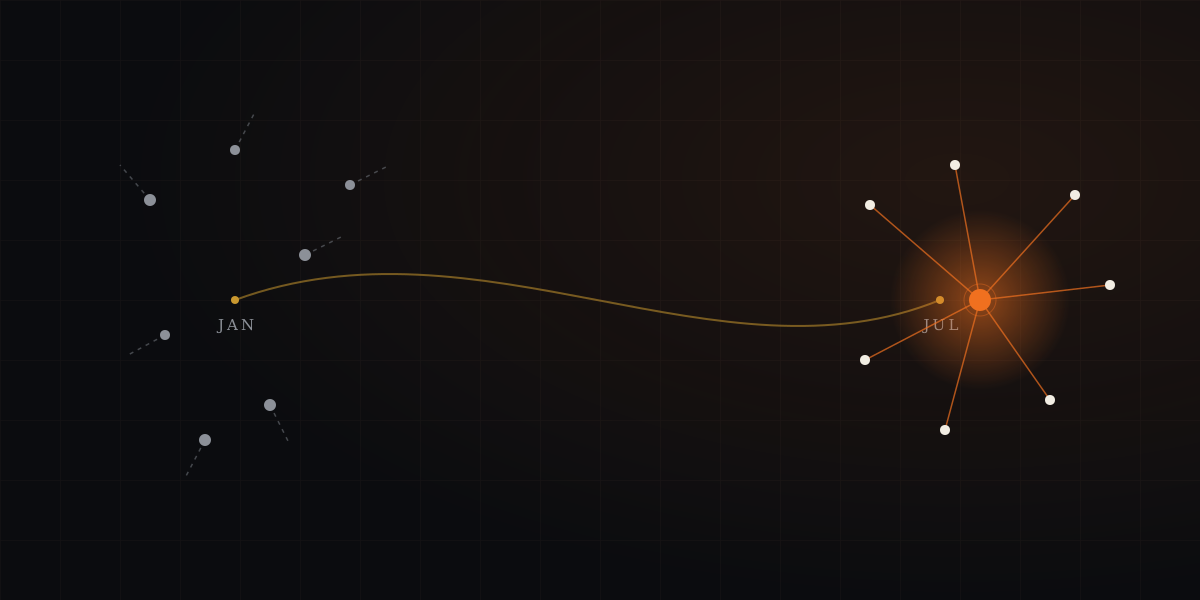
This isn't a bigger memory. It's a system that learns how you specifically think, your patterns, your goals, your open loops, and acts on what it finds, before you ask it to. It connects the note you made in January to the decision sitting in front of you in July. It notices the contradiction between what you committed to and what you're actually doing. It hands you one action drawn from your own thinking, unprompted.
Nothing is ever lost, but that was never the hard part. The hard part, the part recall alone can't do, is knowing which of the thousand things you've said actually matters today, and saying so before you go looking.
What This Looks Like
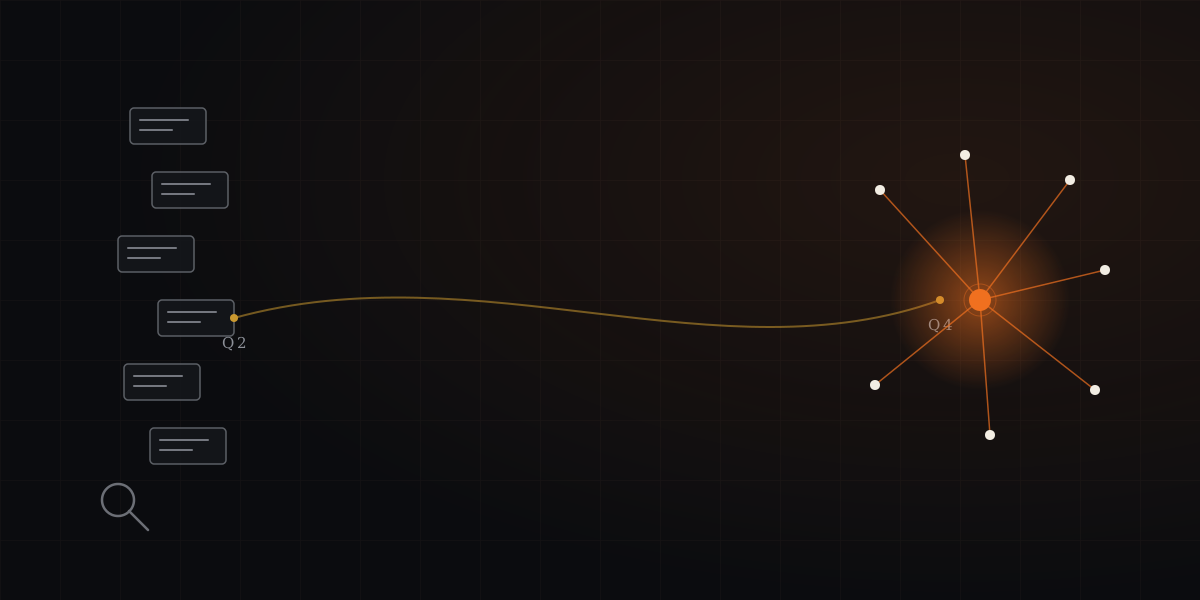
You made a call in Q2 about how to position the product. It's sitting in a voice memo and a half-finished doc, both untouched since. Now it's Q4, and you're about to make a related call that quietly contradicts it. An assistant that remembers everything would answer correctly if you asked it what you said in Q2. It wouldn't say anything unless you did.
Your Personal Intelligence already flagged the contradiction, before you opened the doc, before you asked, before the decision was final. That's the gap between a system that remembers and one that thinks with you.
FAQ
Is there an AI that remembers everything? Several tools log full conversation history and let you search it later. That solves storage, not synthesis, you still have to know to ask, and it still won't tell you why something old matters to something new.
What's the difference between AI memory and Personal Intelligence? AI memory retrieves what you said when you ask for it. Personal Intelligence connects what you said to what you're deciding now, and surfaces it before you ask, the difference between a log and a mind.
Can an AI that remembers past conversations also act on them? Not by default. Remembering and acting are different capabilities. A system has to notice a pattern is relevant before it can act on it, logging the conversation doesn't do that on its own.
Why isn't more memory the answer? Because the bottleneck was never storage. It's knowing which of the thousand things you've captured actually matters right now, and that requires synthesis, not a bigger log.
The Capture Trap is over. Your thinking, compounded. Your next action, surfaced. Nothing lost. Nothing to organize. Just intelligence, personal, proactive, yours.